
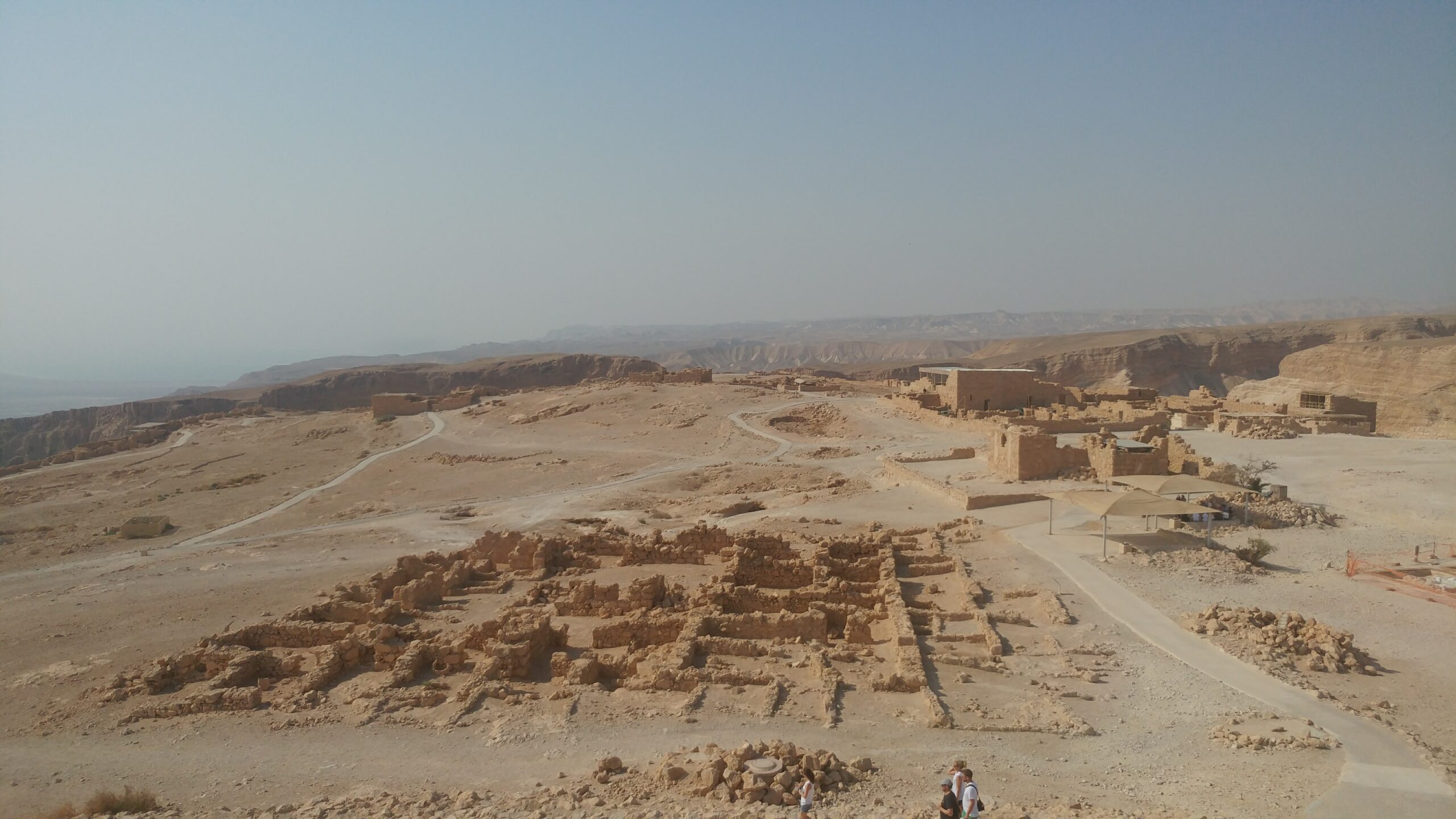
I’ve spent about six weeks in Israel for work. I was there as a consultant at a factory there. I was very hesitant to visit, because of the politics around the Gaza strip and the west bank. I remember living in Europe when an American was murdered trying break the blockade to deliver aid to Gaza.
I was able to visit a number of locations that, years later, Coates would visit, including the city of David, which he points out is propoganda, it is unlikely to actually be the city of David. Either way, it is really cool. I really enjoyed visiting the site.
It was only when I read Coates’s book, that I understood it was where Palestinian homes used to be. That it is a part of the colonialism of Israel next to the city of Jerusalem. I was gutted when I learned that. I didn’t know was was there, I just assumed it was some sort of find during construction. I did not think that construction was due to forced eviction.
After visiting the Dead Sea, I was hit hard by the plight of the poor palestinians on the westbank. They looked destitute. The only language I had to explain their situation to my friends and family was visiting a Native American reservation.
Which is a significantly apt comparison. I read An Indigenous People’s History during the first Trump administration, after the 1619 project was published. In the book Dunbar-Ortiz dives into explicit detail of what “Manifest Destiny” was from the Indigenous People’s perspective. It was war, constant and chronic warfare.
This warfare was intentionally incited by civilian settlers pushing closer and closer to boundaries of Indigenous lands. Those settlers were often from Ireland trying to find better opportunities than from Ireland or England. These people were not the best and brightest at all
-NhwhQSJs3&t=3927
These white people pushed and pushed and pushed, until the indigenous people pushed back. As soon as they did, that was when the US government came to the rescue. The military came in and saved the day.
I mention this, because the same thing is happening in Israel
‘If I Don’t Steal [Your Home] Someone Else Will’ Israeli Settler Justifies Forcible Takeover
That man isn’t from Israel. He’s an American. He’s taking advantage of the fact that Israel is encouraging Americans to become Israeli citizens and become settlers at the “edge of civilization”
To be clear, this is a Zionist position, it is not, as far as I understand it, part of the Jewish Orthodoxy. From following people like Rabbi Danya Ruttenburg (https://bsky.app/profile/theradr.bsky.social) who focuses on restorative justice and initiatives like that, Settlers are abhorrent to her view of Judiasm.
This is a choice by a State, Israel, to continually use Settlers to create pretext for sending in the IDF. We’re seeing this with the ongoing genocide in Gaza.
So, back to The Message, Coates was able to experience the benefits of being an Israel after experiencing a worse experience than growing up Black during Jim Crow as a Palestinian.
He met with former IDF members. He found that there is a limit, often, to what the military is willing to support. Or at least, want to rectify the harm they did.
I think both these books are important for Americans to read. The US Settler approach was intentionally adopted by Israel (at least according to Dunbar-Ortiz). These two books provide significant context to the ongoing “war” in Israel. Since our tax dollars are going to bomb Palestinian children (Average age for a Palestinian is under 18) It is important for Americans to reflect on that.
I think anyone that pays attention to current events should read the Message to provide unique context to the situation. It’s a quick read and Coates’s writing is deeply moving. I don’t think you have to come out of the book agreeing with Coates’s like I did (since I went in agreeing with him), but I think you will need to rationalize to yourself why you disagree with him.
Anyway, thank you for spending your time with me and my friends here. Please drop a comment below to continue the discussion.